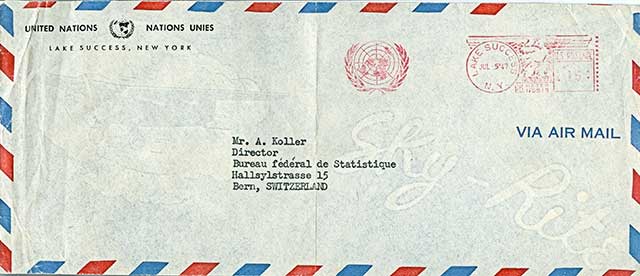
Figure 1 U.N. metered cover and return address from Lake Success (5 July 1947)

Figure 1 U.N. metered cover and return address from Lake Success (5 July 1947)
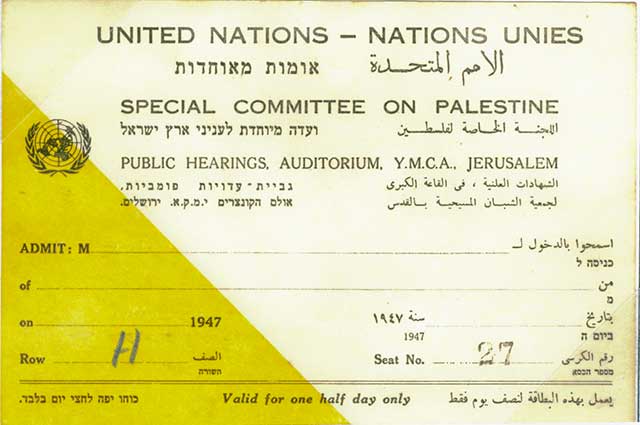
Figure 2 Admission card for public hearings at Jerusalem YMCA.
Partition was “in the wind”. UNSCOP viewed its task to briefly survey Palestinian geography and establish frontiers for Arab and Jewish States, then to elicit comments on a future settlement from Jewish and Arab liaison personnel, and to conduct public hearing about their propositions. Figure 2 shows an official trilingual admission card for the public hearings at the Jerusalem YMCA.
The hearings for 37 representatives of Arab States and 17 Jewish organizations were conducted from 4- 17th July The service cover in Figure 3 posted by express mail from Jerusalem to Tel Aviv on 4 July 1947 marks the time period when UNSCOP worked on the problem of establishing the steps required to develop a post-Mandate administrative structure, with democratically elected Provisional Councils of government for the Arab and Jewish States. Receipt of responses from the neighboring Arab States was scheduled for 22 July 1947. In short, the partition plan was approved by the Jewish Agency in Palestine but rejected by the Palestinian Arabs and regional States.
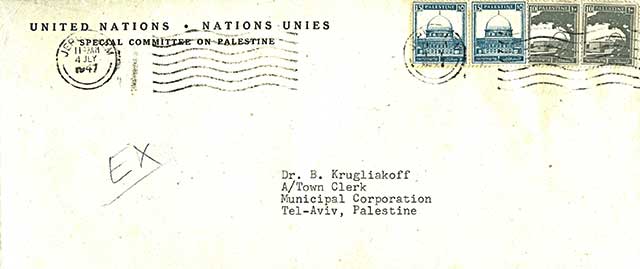
Figure 3 Express mail cover and return address from UNSCOP in Jerusalem.
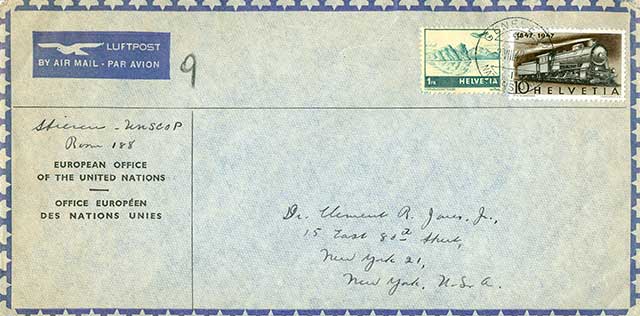
Figure 4 UNSOP cover and return address from Geneva.
A week later, UNSCOP left Palestine and retired to Geneva, Switzerland to prepare its report to the General Assembly. Figure 4 shows an UNSCOP-Geneva service cover posted to N.Y. 29 Nov. 1947. The Partition Plan was approved by the General Assembly on 29 Aug. 1947, and a Palestine Commission was created to carry out its provisions. Arab rejection of the Plan made it impossible for the Commission to function and fighting between the armed militias continued.
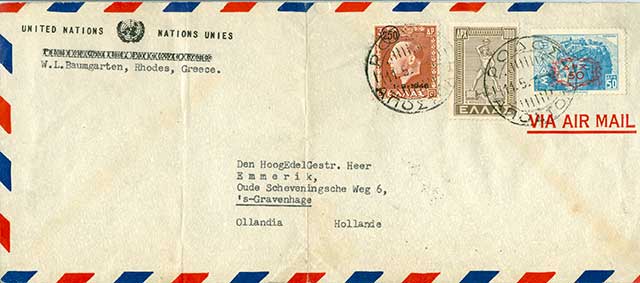
When the U.N. Security Council was advised about the deteriorating conditions, it. created a Truce Commission staffed by consular officers from the French, Belgian and U.S. embassies in Jerusalem. Having no postal facilities of its own, outgoing Commission mail was processed by the French Consular offices. Figure 5 shows a rare service cover from the Commission posted [13 May 1948] to Paris 3 days before Israel declared its independence and was attacked by combined Arab armies. The U.N. called for a cessation of hostilities (Resolution #50) and a truce supervised by its mediator (Count Bernadotte) with the help of a group of military advisors. As it is now known, the U.N. Truce Supervisory Organization (UNTSO) with representatives of the Jewish State and each of the aggressor States to negotiate a separate “peace” on the Island of Rhodes (February-July 1949). Figure 6 shows a letter posted to the Netherlands by a member of the Truce Commission in the midsts of those negotiations (May 11, 1949). The War officially ended with the parties signed an armistice on 29 July 1949.
UNTSO military observers are today attached to the U.N.’s peacekeeping forces that serve with the Disengagement Obseerver Force in Israel-occupied Syria, the Interim Force in Lebanon, and the Multinational Force and Observers in the Sinai Desert.


Figure 5 French Consular cover and return address for Palestine Commission.
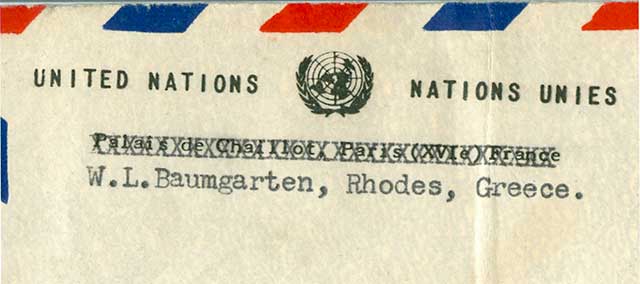
Figure 6 Truce Commission (UNTSP) cover and return address from the Island of Rhodes.
Click here to add your own text